

Guignard Kyoto Collection
Chinese Mortar 唐臼 | Seisetsu Shūcho 誠拙周樗 | 1745–1820
Chinese Mortar 唐臼 | Seisetsu Shūcho 誠拙周樗 | 1745–1820
Couldn't load pickup availability
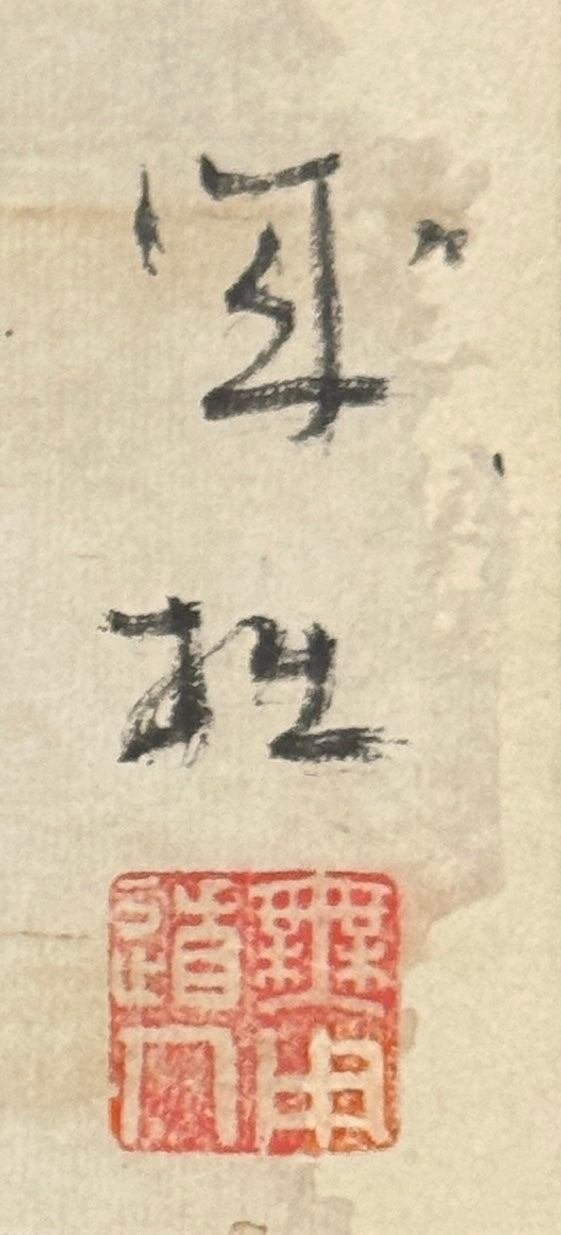
Seisetsu Shūcho, also known as Daiyu Kokushi, was a highly respected Zen priest, artist, and writer. He was regarded as a key figure in the reconstruction and revitalization of Engakuji, the second-largest Zen temple in Kamakura.
The subject of the painting is a “Chinese mortar” - a relatively large, long-obsolete tool used to make mochi rice flour (it is still used today in Bangladesh). The mortar symbolizes the effort a Zen practitioner must exert in striving to pulverize his petty worries until they are nothing more than dust that a gust of wind can blow away. However, working with a Chinese mortar is considered hard labor; often, it even required two workers to operate it.
Shūcho, of course, simplifies the depiction of this bulky tool - the mortar bowl itself is merely a circle, and the long crossbar with the mortar head is no more complicated than the character for “one.” It seems significant to me for the parable, however, that the right end of the crossbar becomes thin and stringy like a brushstroke - giving it a light appearance (which makes the left end with the mortar head look all the heavier) - and that this end does not rest on the H-shaped frame on the right. Since the work involved (see photo) consists of pressing down on the beam with the heavy mortar head so that the mortar head then falls into the trough and crushes the rice grains, the tool is depicted here in its state before anyone has performed the work, and thus the painting is also intended to speak directly to Zen practitioners: Without your effort, nothing happens at all, and you must repeat this effort several times with great exertion until you achieve some useful effect - that is, until your petty mental and spiritual trifles crumble to dust.
The mounting responds to the ponderousness of the ancient peasant tool: the yellowish brocade fabrics have weight, the dark blue feels heavy, and the roller attachments are made of stag horn, which does not appear light and pleasing like, say, ivory or high-gloss black lacquer.