

Guignard Kyoto Collection
Danse macabre | Unknown (seal undeciphered) 不詳 | Late Edo period (18th/19th centuries)
Danse macabre | Unknown (seal undeciphered) 不詳 | Late Edo period (18th/19th centuries)
Couldn't load pickup availability
This depiction of a merry party of skeletons and a bone-couple in love beneath a mosquito net reflects the black humor for which Kawanabe Kyosai (1831–1889) is so well known. However, this painting is likely older.
Attitudes toward death and life in ancient Japan differed from those in the Western world. Buddhism offers entirely different answers to the question of life and death. A person dies and is reborn into another existence. What remains is the skeleton, and that alone is the part of the person that remains bound to their past existence for a while longer. The soul migrates into another body. Therefore, painting skeletons that are still attached to this present world is not sacrilege or even obscenity.
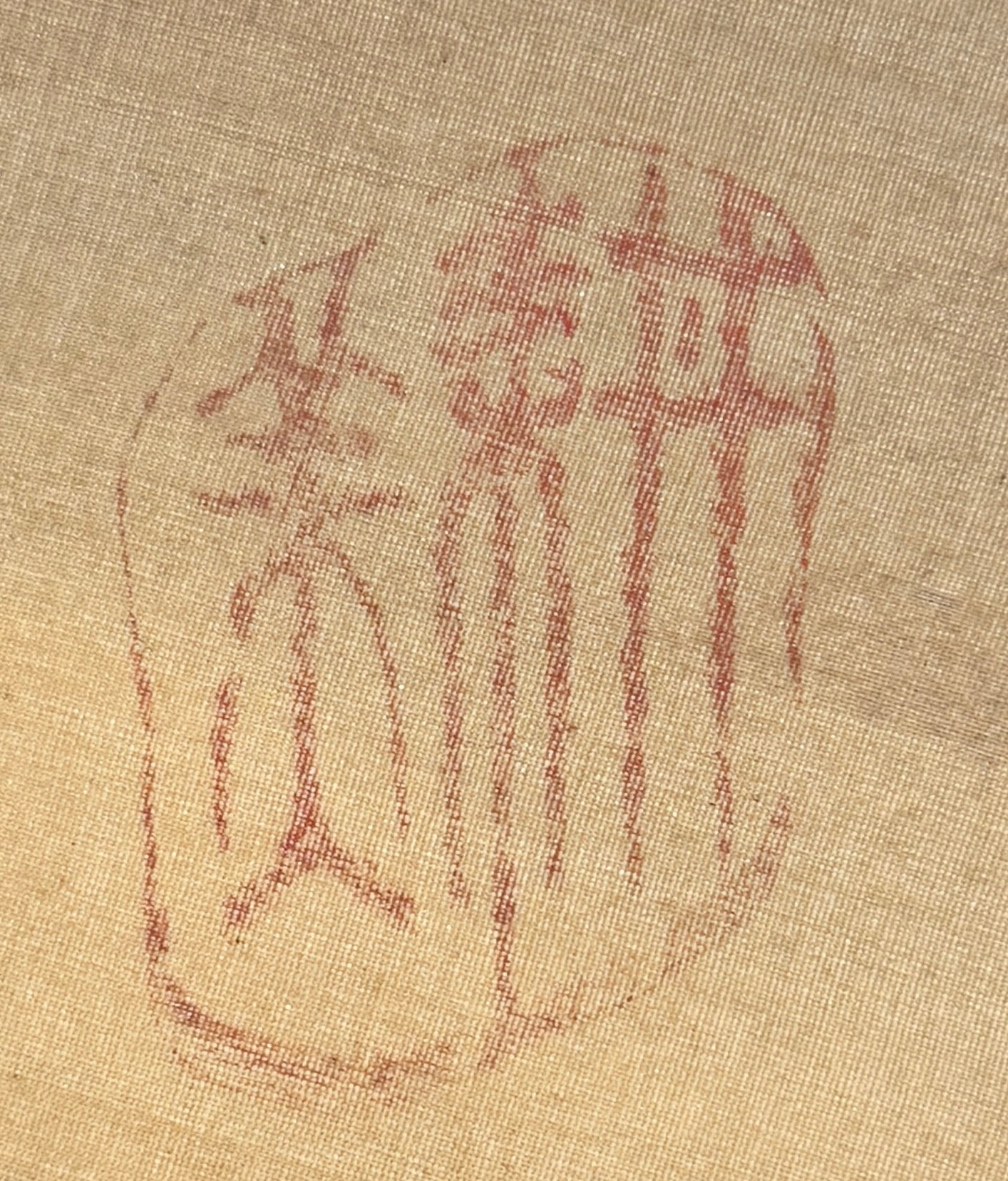
The seal on this painting cannot be deciphered, and the painting is unsigned. The dating to the “Late Edo period” (i.e., late 18th century or early 19th century) cannot really be verified but is based on assumption.
The painting has been fully restored, but the original gold silk mounting has been preserved, as have the bronze scroll fittings. Only the fabric at the very top and very bottom (jōge) is new.