

Guignard Kyoto Collection
Princely Hunt | Kanō Dōshun 狩野洞春 (Yoshinobu 美信) | 1747–1797
Princely Hunt | Kanō Dōshun 狩野洞春 (Yoshinobu 美信) | 1747–1797
Couldn't load pickup availability
Kanō Dōshun was the fourth head of the Kanō studio in Surugadai. The Kanō School - Japan’s most prominent painting institution - operated several large studios across the country, carrying out commissions for the rich and powerful and decorating their residences with hanging scrolls, folding screens, and painted sliding doors.
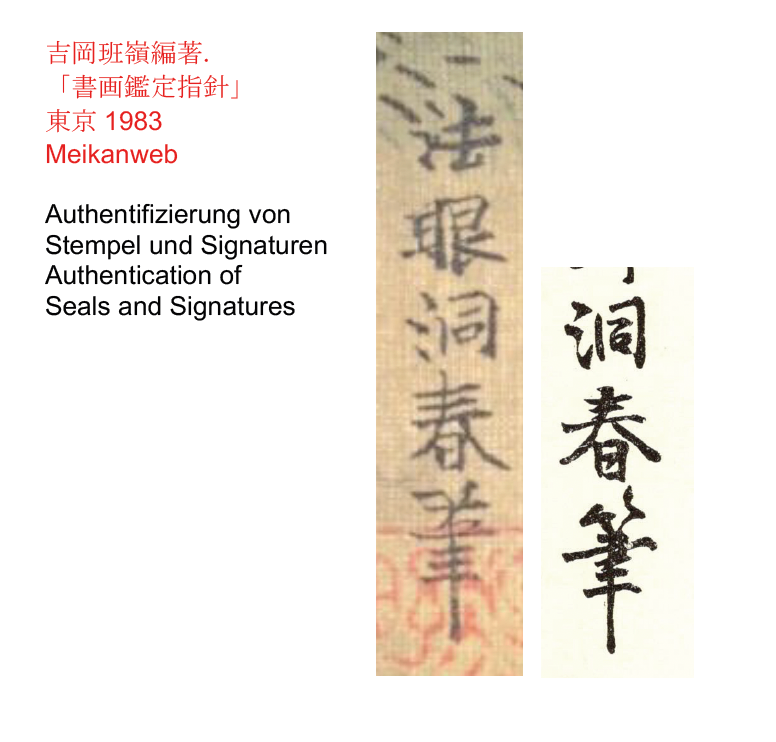
We do not know much about Dōshun, which is not uncommon even among great artists in Japan. A highlight of his career was a commission from the shogun to paint a folding screen as a gift for the King of Korea. Dōshun was awarded the title hōgan, one of the highest official honors for a painter. (He signed this painting with this title.)
The painting has a courtly theme. The Japanese loved the motif of the “Mongolian Princely Hunt.” For a painter of his time, such a subject was pure fantasy, based solely on models that, in turn, had also sprung largely from the imagination.
The painting appears exquisite in the extremely fine details of the animal depictions and the acrobatic poses of the hunters. One can almost feel the speed of the galloping horses, for which Mongolian riders were famous.
The blue used here is a color that, in Dōshun’s time, was associated with the art of the mainland. To highlight the magic of this exquisite-looking color, the painting was given a new dark blue silk mount.
The traditional motif of the brocade picture border (ichimonji) is seizan “Blue Mountains” ; although the fabric is gold in color, this is intended to evoke the “mainland blue” which actally exists in the tent roof and some costume details in the painting.