

Guignard Kyoto Collection
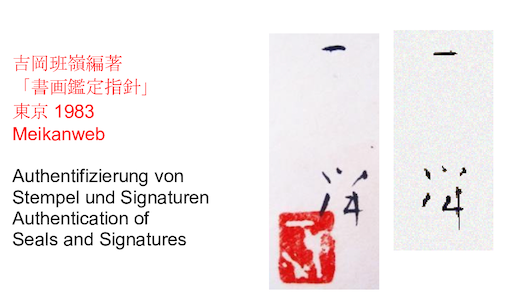
Circular Painting Jiuta (the dance piece Yuki 雪 "Snow") | Matsumoto Ichiyō 松本一洋 | 1893-1952
Circular Painting Jiuta (the dance piece Yuki 雪 "Snow") | Matsumoto Ichiyō 松本一洋 | 1893-1952
Couldn't load pickup availability
Matsumoto Ichiyō is a painter who grew up immersed in Kyoto culture and remained connected to the city as a teacher. He has participated in countless prestigious exhibitions in Japan and has received numerous awards. He is a typical Nihonga painter, meaning he belongs to the school of thought that, since the late 19th century, has focused on creating a new, traditionally Japanese art. This style is recognizable primarily by its distinctly Japanese motifs, but also very often by its delicate use of color, which makes beautiful women, in particular, appear almost unreal.
This beauty lacks all individualization; she is the epitome of grace and preciousness. As an aesthete trained from childhood, Ichiyō understands the power of subtle details. The blue of the hairpin is undeniably captivating, and the small, visible glimpse of a vibrant red underdress relies on minimal gestures to achieve an erotic allure. Presumably from his teacher, Yamamoto Shunkyō—one of the most important ink painters of the early 20th century—Ichiyō learned to wield the power of the large brush. Although he uses only very thin ink, he wields the brush with force and monumentality to define the dancer's light gray kimono.
The painting is referred to as Jiuta, and specifically as Yuki. Jiuta is a vocal chamber music genre, also accompanied by dancing; it was primarily cultivated by entertainers in the pleasure districts. The piece Yuki, like most of these pieces, has the theme of a beautiful girl consumed by lovesickness.