

Guignard Kyoto Collection
Sparrows and Turtle 雀と亀 | Nagasawa Rosetsu 長沢芦雪 | 1755 -1799
Sparrows and Turtle 雀と亀 | Nagasawa Rosetsu 長沢芦雪 | 1755 -1799
Couldn't load pickup availability
Although Nagasawa Rosetsu was a star pupil of Maruyama Ōkyo (1733–95), the painting genius of the 18th century, he was, along with the two other painters Itō Jakuchū and Soga Shōhaku, one of the ‘Three Eccentrics’ of the 18th century, who took an aesthetic stance in opposition to Ōkyo’s pleasing conventionality. Like these colleagues, Rosetsu also experimented with unfamiliar pictorial compositions and approaches that could often be described as extremely expressionistic.
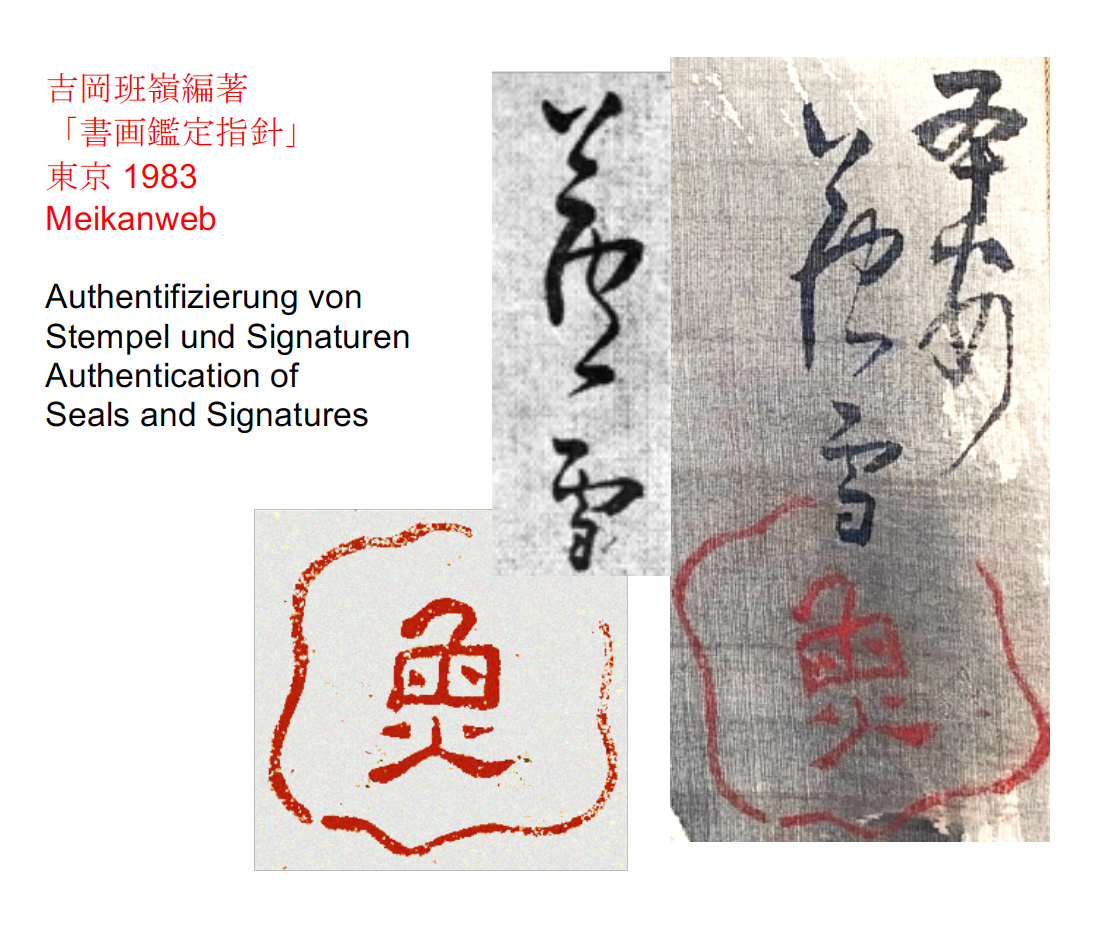
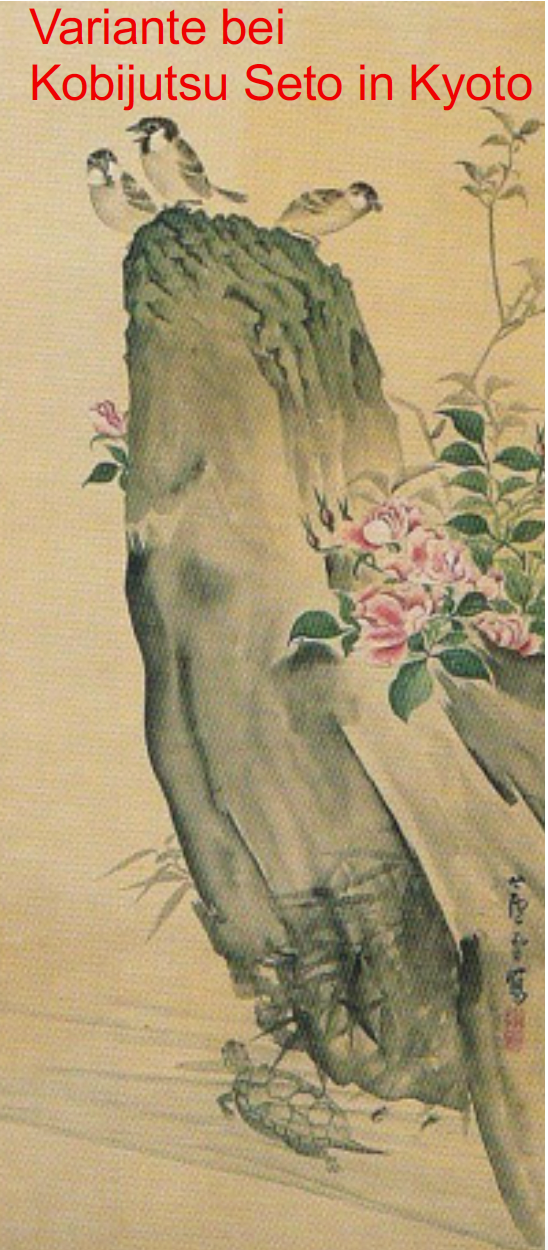
This painting exists/existed in an almost identical variation (at the Seto art dealer’s in Kyoto); its authenticity here is confirmed by an inscription on the inside of the lid of the painting’s box by his adopted son Nagasawa Roshū (1767–1847) and a further inscripten by the famous painter Kawabata Gyokushō (1842-1913).
Several aspects of this painting are unusual and original. Of particular note is a huge boulder that dominates the centre of the composition; the vividly rendered chattering sparrows perched upon it are typical of the realism that Rosetsu owed to his teacher.
In the lower part of the picture, a turtle is swimming in the water. Its avian counterpart would not actually be the sparrow, but the crane. Such a pairing of motifs is therefore quite unusual.
Another unusual element is the rose motif in the centre-right: roses are rarely depicted in classical Japanese art. Here, they clearly serve as a splash of colour to balance the almost menacing grey of the rock.
This is a painting whose subject matter is anything but straightforward – yet it was precisely this sort of deviation from convention that the ‘eccentrics’ loved, although Rosetsu was by far the least daring among them.