

Guignard Kyoto Collection
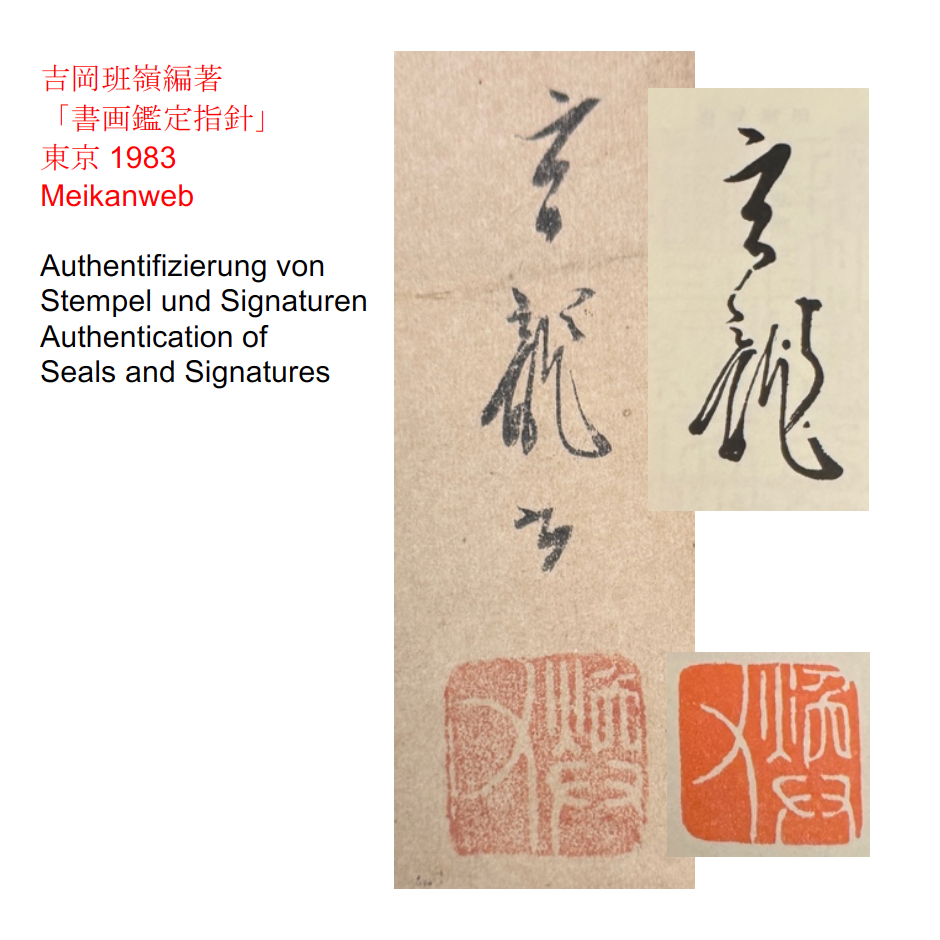
Dance 舞 Mai Calligraphy | Sasaki Genryū 佐々木玄龍 | 1650-1723
Dance 舞 Mai Calligraphy | Sasaki Genryū 佐々木玄龍 | 1650-1723
Couldn't load pickup availability
Sasaki Genryū was a respected writer and painter. The monumental, confident brushstroke of this calligraphy makes it understandable that the great painter Hanabusa Itchō was fascinated by him and chose him as his teacher.
"Dancing" is written in two ways in Japanese. One is 舞うmau and the other 踊るodoru. Odoru is more lighthearted—this term encompasses most folk dances and dances in entertainment districts. Mau is classical art dance; the term is older as a category. Mai, therefore, has a much more serious connotation.
The small characters on the left are written in the venerable seal script, and the text is a classic congratulatory formula: senshūraku banzai Nanzan kotobuki "Long live the 10,000 autumns in the imperial city of Nara, Long Life." This makes it clear that the idea behind this dance symbol refers to the court dance bugaku (舞楽) , which has been practiced in Japan since the 8th century.
Court dancers wear magnificent robes, adopted from or at least inspired by Silk Road culture. The dance itself is generally slow, clear, and unambiguous in its choreography, with many symmetrically balanced movements. The somewhat complex symbol, so dynamically calligraphed here, conveys something of the powerful dance, whose repertoire also includes many victory dances characterized by heroic, warrior-like gestures.
Many costumes include long trains (see the green overcoat below), and so one is tempted to interpret the long stroke in the calligraphy as an indication of a magnificent train.
The mounting is original; its age is difficult to determine, but it certainly stands out due to its decorative quality, which is surely intended to evoke the colorful robes of the court dancers.