

Guignard Kyoto Collection
Bosatsu (guanyin) 自在思維菩薩 (“freely thinking” Bosatsu) | In the style of the Song Dynasty (960–1279) |
Bosatsu (guanyin) 自在思維菩薩 (“freely thinking” Bosatsu) | In the style of the Song Dynasty (960–1279) |
Couldn't load pickup availability
Stylistically, the sculpture can be dated to the Song Dynasty in China (960–1279). The figure’s actual age could only be determined through a physical analysis of the wood. It may be a later copy. Its posture is distinctive; many Bosatsu of this genre sit on a stone, with the left leg resting on the ground and the foot of the right leg placed on the left thigh. They rest their head in the palm of their right hand, which supports their arm. There are other Bosatsu postures in which the figure sits on the ground and rests the left arm on the left leg, etc.
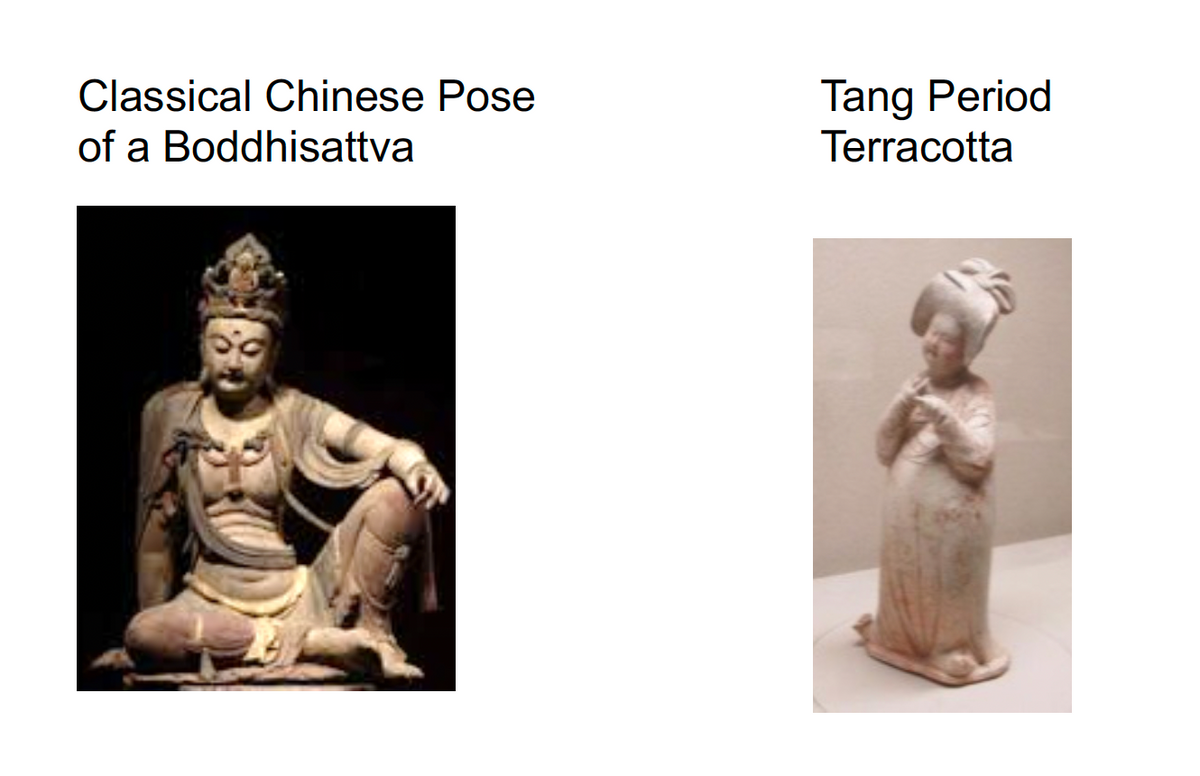
The posture of this figure is extraordinary. Its liveliness is reminiscent of depictions of people from the Tang period (617–907)—for example, terracotta court ladies who, with their heads tilted or turned, display a touchingly realistic posture of debate.
This sculpture, seated in the lotus position and belonging to the category of “freely contemplating Bosatsu,” displays an incredibly lively and fresh gesture of discussion—it is as if the Bosatsu were trying, at that very moment, to make it perfectly clear what truly matters to him. The figure required restoration in two places and was given its own custom-made box made of paulownia wood. The hole in the back was used to store sacred texts.
Provenance: China; Importer in Japan: 490-1113 Tsuru-meido (Mochizuki Shoji), Hideo Ito, Nakakayatsu, Ama City, Aichi Prefecture