

Guignard Kyoto Collection
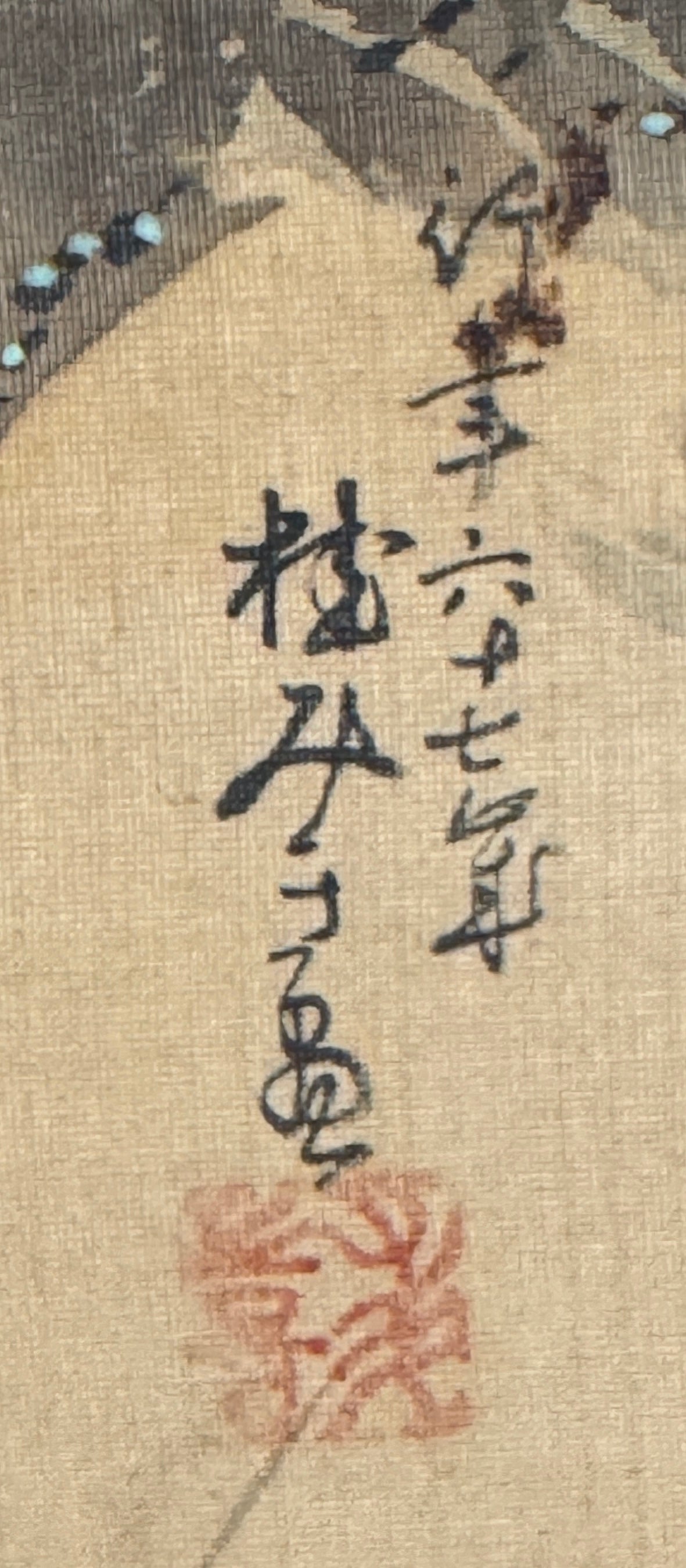
A Lady as Fugen Bosatsu on a white elephant | Signature and seal not deciphered | 18th/19th century
A Lady as Fugen Bosatsu on a white elephant | Signature and seal not deciphered | 18th/19th century
Couldn't load pickup availability
The authorship of this painting is unclear, but the motif is unambiguous. It depicts Fugen Bosatsu, one of the two most important bodhisattvas in Buddhism. Fugen Bosatsu (Sanskrit: Samantabhadra) - in contrast to Manjusuri Bosatsu, who embodies the meditative element - symbolizes activity in Buddhism. In ancient depictions, Fugen Bosatsu sits atop a white elephant with six tusks, which can certainly be linked to the white, six-tusked elephant that the mother of the historical Buddha saw at her side when her son was conceived. This symbol of active love, which creates new life, is therefore fittingly the attribute of the “Active Bosatsu,” Fugen.
This connection to the Buddha’s mother is likely also responsible for the deity’s traditional depiction as female. In this image, we see a ladylike beauty who, judging by her attire, can be interpreted as a geisha of considerable rank. The fact that she is seated on the white elephant, absorbed in reading, relates to an important role that Fugen Bosatsu (in the Nichiren sect) assumes: he (she) watches over the purity of the Lotus Sutra—and so we can also guess what the lady is reading.
The subject occupies an interesting position between religious themes and eroticism. The way the lady, with her face painted white, wears her kimono would reveal a great deal of her neck (which we do not see in the painting, however), a look that was considered alluring, and the elephant’s posture can be described as ecstatic.
The banana leaves on the right edge elegantly frame the Bodhisattva.
The mounting with the patterned silk should not be overlooked—it enhances the intended luxurious expression of this painting, which may once have hung in a teahouse.