

Guignard Kyoto Collection
Full Moon and Autmn Grass | Kanō Isen’in (Father) 狩野伊川院, | 1775–1828 | Kanō Seisen’in (Son) 狩野晴川院 | 1796–1848
Full Moon and Autmn Grass | Kanō Isen’in (Father) 狩野伊川院, | 1775–1828 | Kanō Seisen’in (Son) 狩野晴川院 | 1796–1848
Couldn't load pickup availability
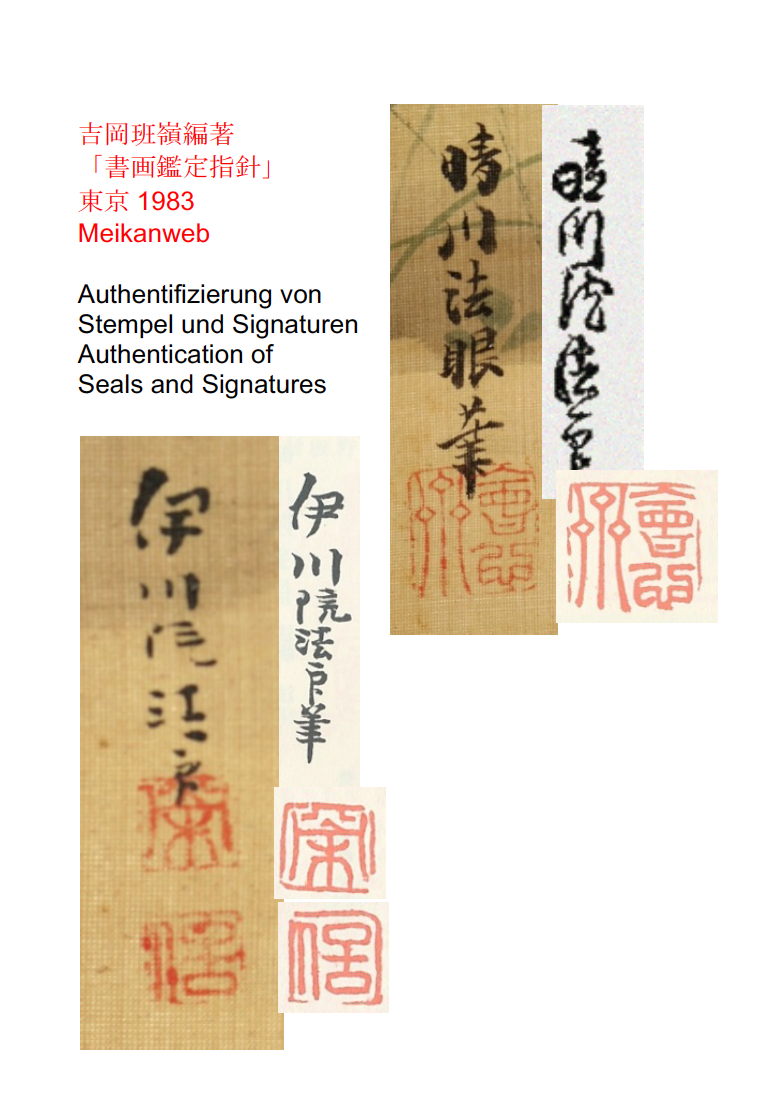
This is a touching teamwork by father and son—both were regarded in their time as the leading figures of the Kanō school (they were the 7th and 8th heads of the Kobikichō studio in Kyoto), that is, the artistic institution whose paintings were influential and trend-setting for over 500 years of art history.
Together, they created a wonderfully harmonious autumn scene featuring a full moon (father), bush clover blossoms, and susuki grass (son), in keeping with the poetry of the Japanese autumn.
The purple blossoms of the hagi shrub—known in English as “bush clover”—hold special significance, as their violet hue is reminiscent of the color purple, which in the Middle Ages was reserved exclusively for the nobility. For artists of the 17th and 18th centuries, it was simply the color of the elegant robes worn by beautiful women. Thus, the poet Basho (1644–1694) wrote:
In one house,
courtesans also slept —
hagi and the moon