

Guignard Kyoto Collection
Calligraphy Three Autumn Poems | Fujiwara (Karasumaru) Fuyumitsu 藤原(烏丸) 冬光 | 1473-1516
Calligraphy Three Autumn Poems | Fujiwara (Karasumaru) Fuyumitsu 藤原(烏丸) 冬光 | 1473-1516
Couldn't load pickup availability
Karasumaru Fuyumitsu was a nobleman from the Fujiwara family, about whom little is known except for his rank as councilman sangi, and who is only known as an excellent calligrapher.
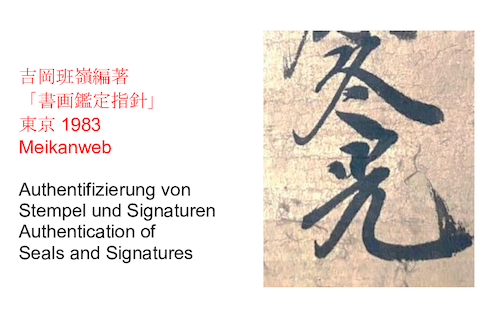
What is special about such courtly calligraphy is that the title of the calligraphy is often found first on the right, followed by the name of the calligrapher; the calligraphy is therefore not signed at the end. The first two lines read:
秋日同歌三首和歌 参議藤原冬光
Three poems to be sung in autumn (waka) by Councilman Fujiwara no Fuyumitsu (written)
The calligraphed texts are read as follows:
1st poem:女郎花露Dew on the golden valerian
いつの秋に結そめてか をみなへし露もかはらす. 契をくらん
In which autumn did we first forge our bond? / The dewdrops on the golden valerian remain unchanged / so shall our vow be.
2. Poem: Melancholy on an Autumn Evening
ならふにもたへぬ夕の 身をしれはなをさりなりし 初あきの雲
Now I know how hard it will be when the evening comes to an end / because I realize, / that it resembles the (glorious) clouds that dissipate in early autumn.
3. Poem: Love-drunk return in deep night
かへるさをおもふ名残も ふかき夜の袖よりあまる みち芝の露
Thinking about going home leaves a feeling of melancholy. / Even more so than my wet sleeves. Glistens in the deep night / the dew on the grass at the roadside.
These tanka texts perfectly embody the poetic conception of autumn in Japan: melancholy, farewell to a loved one, night scenes. The calligraphic lines do not reflect the five structural lines of poetry (5-7-5-7-7 syllables) – two lines of poetry are combined into one calligraphic line, so that graphically, three three-line poems fill the format, transforming the calligraphy into a form of painting that follows only pictorial principles. In other words, we visually appreciate the flow and delicacy of the strokes, the clusters of lines that arise in Chinese characters, and the courtly elegance of the text's delicate syllable fragments. The calligraphy delights the eye even before one has understood every detail of the text. This aesthetic pleasure is enhanced by the exquisite antique mounting, which features a harmonious floral motif in muted autumnal colors.