

Guignard Kyoto Collection
Calligraphy snow 雪 | Ingen Ryūki (Ōbaku School) (attr.) 隠元隆琦(伝) | 1592-1673
Calligraphy snow 雪 | Ingen Ryūki (Ōbaku School) (attr.) 隠元隆琦(伝) | 1592-1673
Couldn't load pickup availability
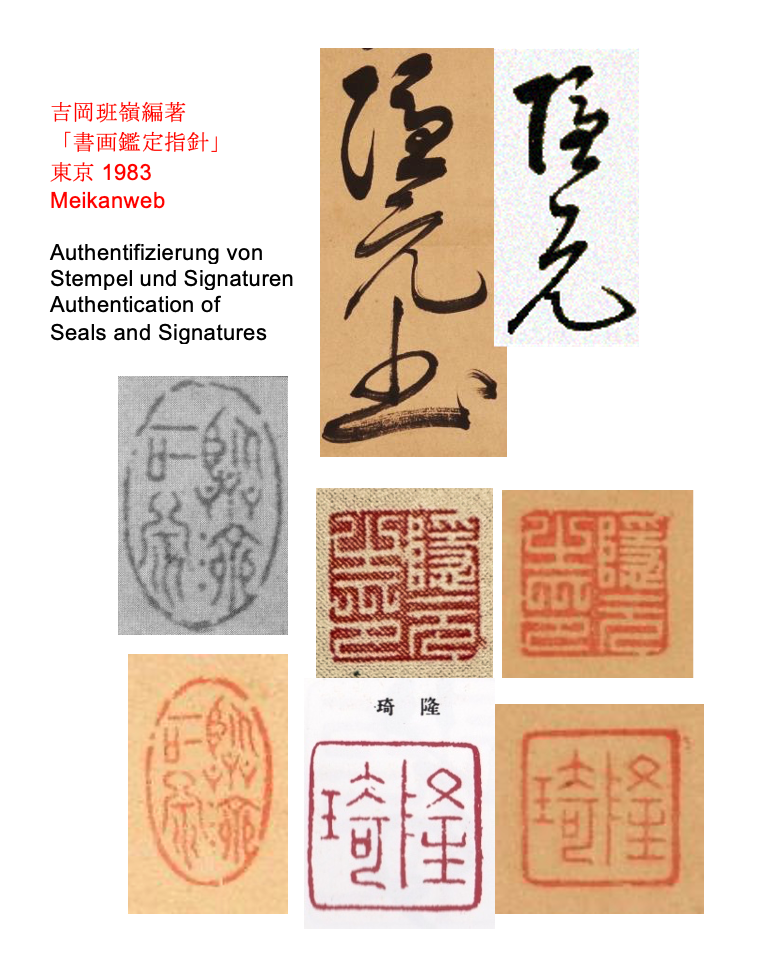
This image is a special case, since its correspondence to a calligraphy by this priest in the National Museum in Kyoto (and all the evidence of seals and signature) should actually leave no doubt about its authenticity. Nevertheless, I classify it as "attributed," because one should always be cautious regarding authorship when dealing with famous Chinese calligraphers.
Ingen Ryūki is the main figure among the priests who fled from China to Japan during the turmoil at the end of the Ming Dynasty (1368-1644), and after some difficulties were allowed to build the Chinese temple Manpukuji near Kyoto and founded the Obaku school of calligraphy.
These priests brought much cultural heritage with them and were therefore highly valued in Japan. A major innovation in their calligraphy was the graphic emphasis on the first character of a phrase, which thus became the title of the entire calligraphy. Here, it is the character for "snow." Since snow is white, other characteristics of snow must be expressed with the ink brush. Here, it is certainly the softness of a blanket of snow, and so the relatively complex character is combined with many individual strokes in one large, harmonious sweep. Although it consists of two parts—upper 雨, lower ヨ —the brush is not lifted; rather, it is as if the snow unites the "duality." Does this reflect a Buddhist pursuit of overcoming duality?
The text reads: 雪 花堆裡鉄心 肝
Literally: In a snowdrift - an iron heart
Meaning: Snow load - the heart remained steadfast