

Guignard Kyoto Collection
Zen haboku Landscape | Kanō Tanyū (狩野探幽) | 1602–1674
Zen haboku Landscape | Kanō Tanyū (狩野探幽) | 1602–1674
Couldn't load pickup availability
Tanyū is undoubtedly the most outstanding artistic figure of the all-powerful Kanō school in the early 17th century. It was he who formulated the new style of the Edo period (1602–1867), enabling the school to build upon his creations in terms of content and leave its mark on the new artistic era.
A defining feature of his artistry is his versatility, which responded to the needs of a society that was becoming increasingly bourgeois. The stylistic richness of his style became the ideal of virtuosity for the most talented painters of the era.
The subject of this painting is ‘Zen painting in the haboku style’, as introduced from China by Sesshū in the 15th century and brought to perfection in Japan. Haboku translates literally as ‘broken ink’. It refers to a quickly sketched ink drawing that alludes to Zen enlightenment. Tanyū (unlike Sesshū) had never received any formal Zen training, but his genius was so outstanding that he nevertheless mastered this Zen style with great skill.
This small landscape might (by chance?) have emerged from a large ink blot, from which the inspired painter then created a group of trees. However, he did not do this by laboriously working on the blot. No, he simply added a few more strokes in a flash and with sure intuition (using varying intensities of ink), and suddenly there was a hill, a high mountain, a temple and a fisherman on the lake, and so on.
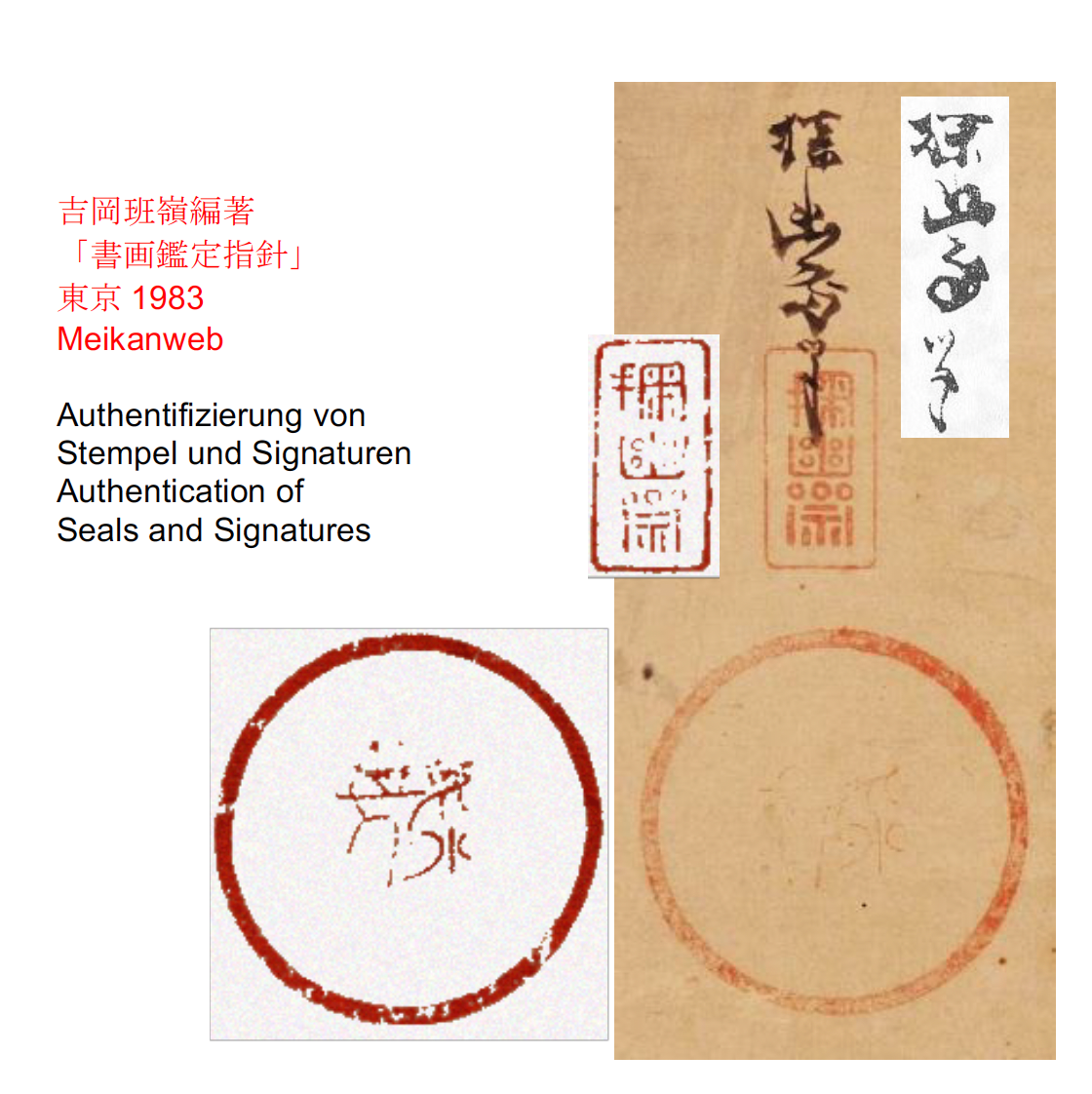
The danger with such spontaneous images is that the barely planned brushstrokes fail to form a coherent whole. Yet it is precisely this aspect that makes this little gem so appealing. The pace at which Tanyū worked, once an ink blot had, as it were, ‘happened’, did not prevent him from creating a landscape painting that was perfectly balanced in itself (a balance that, in terms of composition, also includes the signature and seal).