

Guignard Kyoto Collection
Two Aubergines | Shibata Zeshin 柴田是真 | 1807-1891
Two Aubergines | Shibata Zeshin 柴田是真 | 1807-1891
Couldn't load pickup availability
Shibata Zeshin is best known as a lacquer painter. From an artistic and technical standpoint, this is a distinctly Japanese craft that has never achieved comparable sophistication in any other culture. Shibata Zeshin is undisputedly the most brilliant artist in this genre. Prices for this artist’s lacquer works had already reached dizzying heights by the end of the 19th century. His lacquer works are represented in all major Asian art collections around the world.
Zeshin came from a family of artisans; his father was a sculptor, and he began an apprenticeship with a lacquer master at an early age, though he later also studied under renowned painters such as Okamoto Toyohiko. Despite these studies, he always remained an artist of urushi-e, or lacquer painting, which has much more to do with technique and materials than conventional painting on paper or silk. This “lacquer background” left its mark on many of his paintings on silk and paper: When Zeshin worked with color, his choice of colors was usually very distinct, sometimes bordering on the garish - an effect that works well when painting on black lacquer.
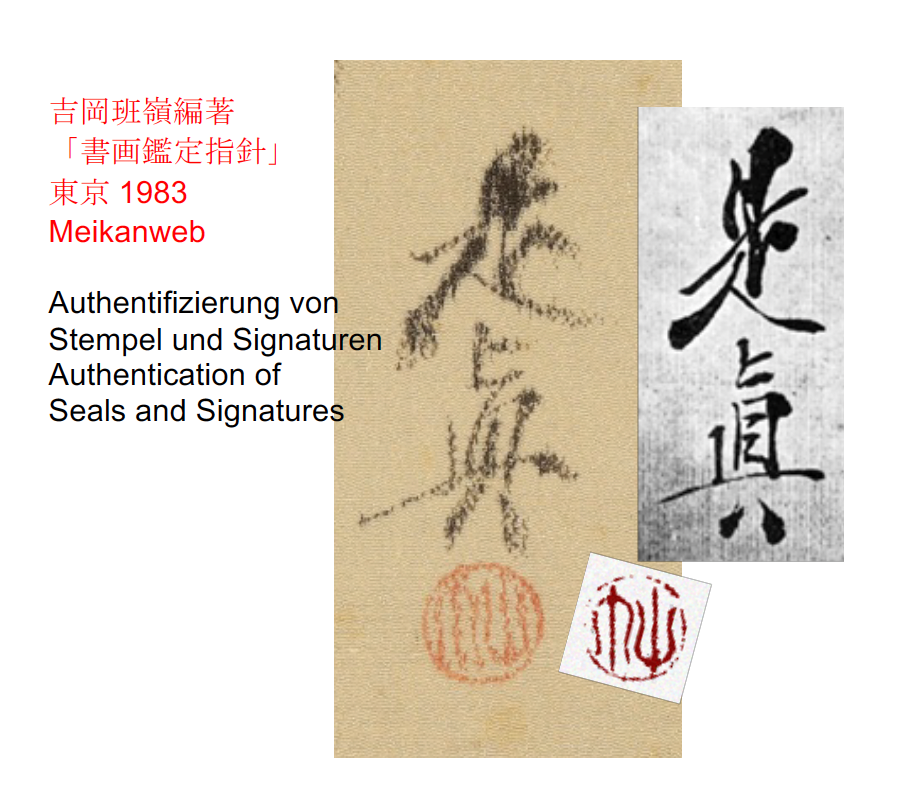
In this ink painting, it is striking that the two eggplants are a very intense black (almost like a solid application of lacquer) - no shading reveals their spherical shape. The calyxes and the stem of one eggplant, however, are painted lightly with watery, pale ink. This gives the impression that Zeshin is playing with the material of the painting’s base. He seems to have deliberately chosen a relatively coarse silk so that these calyxes can take on their own texture when painted with quick brushstrokes using little ink. The silk thus stands out strikingly here with its somewhat unusually rough texture. Zeshin takes great delight in this textile effect, particularly in his signature. It almost looks as if he signed not with a brush, but with a grainy chalk pencil.